People always ask me what my favorite product is.
After 30+ years building everything from race cars to robots to medical devices, that’s like asking a parent to pick a favorite kid.
But one product does stand out – not because it was the most complex, but because it’s such a simple, elegant, and honest form of innovation.
No AI.
No robotics.
No app.
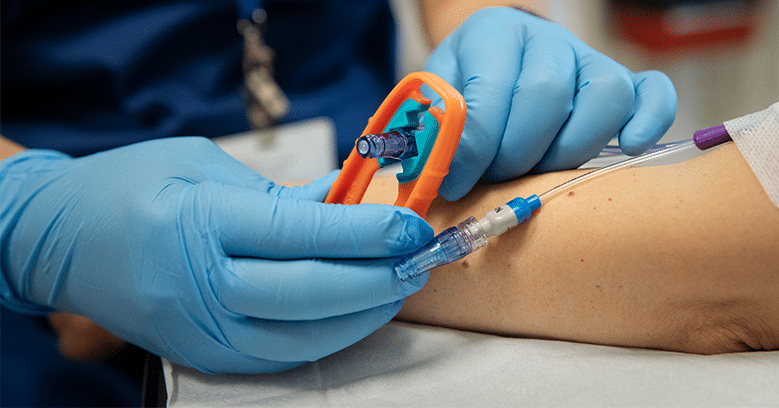
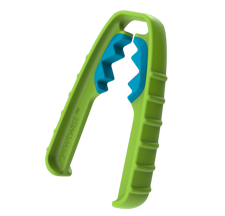
Just a simple tool that helps nurses disconnect stubborn luer locks on IV lines without damaging them.
And that’s exactly why it’s brilliant.
Most people misunderstand innovation.
They think it’s about adding more – more features, more tech, more “smart.”
But the best innovations are deceptively simple. They perform a single job exceedingly well and work exactly the way you expect the first time (okay, yes… YewTwist technically has a manual – medical device rules).
That was Maria Plummer’s insight.
She’s an oncology nurse who spent years fighting luer locks every day. Pliers. Forceps. Twisting until the plastic made that awful creaking sound. Risking cutting an IV line – or herself.
She didn’t try to reinvent the luer lock.
She didn’t add motors, sensors, or Bluetooth.
She wanted a simple tool that could be used on different sizes, wouldn’t damage the lines, and made a nurse’s job a bit easier.
Grip. Twist. Detach.
The whole value proposition in three words.
What I love most is how it avoided the usual traps – no feature creep, no innovation theatre, no imaginary “problems” added just to justify sizzle.
Sometimes the best problems to solve are the simple ones everyone else has learned to live with.
The quiet daily frustrations.
The overlooked moments.
The problems nobody has “ownership” of.
YewTwist didn’t disrupt an industry.
It simply made work life a bit better for the people doing the real work.
💡 Innovation isn’t about ideas — it’s about execution.
And sometimes the smartest execution is knowing exactly what not to add.